
Organize Your Freezer In 5 Easy Steps

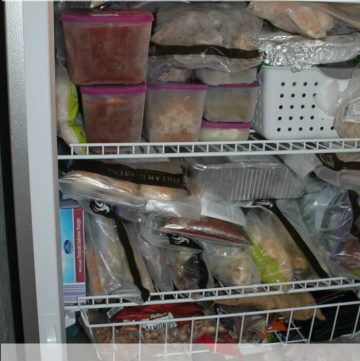
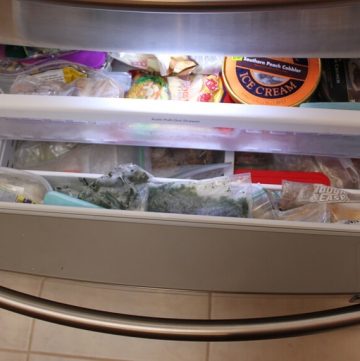
This is my freezer below the refrigerator. It may not look super organized but it is! On the upper level is baked goods like tortillas and bagels, on the right is our ice cream stash. On the bottom, left side is nuts and some other leftover recipe ingredients. On the right is frozen fruit & veggies. In the upper edge, I have frozen herbs like parsley, cilantro, garlic, ginger, etc. and some homemade coffee creamer. I use my extra freezer to hold bigger items like meat or prepared meals ready to heat and eat.[/

This is my freezer below the refrigerator. It may not look super organized but it is! On the upper level is baked goods like tortillas and bagels, on the right is our ice cream stash. On the bottom, left side is nuts and some other leftover recipe ingredients. On the right is frozen fruit & veggies. In the upper edge, I have frozen herbs like parsley, cilantro, garlic, ginger, etc. and some homemade coffee creamer. I use my extra freezer to hold bigger items like meat or prepared meals ready to heat and eat.[/

As I’ve mentioned, I have been participating in the Pantry Challenge hosted by Real Mom Nutrition. I included my freezer and refrigerator too. And since I’m getting ready for a big freezer cooking session coming up in the next week so getting my freezer in order is very important! I’ve talked about freezer organization before but it’s been awhile and a lot of you are new so sharing my tips with you today!

Now before I started meal planning, I didn’t give much thought to how things were organized in my freezer. I mean, you just throw it in and it’s saved forever, right? No! As I started meal planning more, I realized I’d need to have a system of some kind that helped me keep track of what was going in so I could use it up later. Freezing foods can help you save money in the long run too by preserving leftover food or letting you take advantage of sales or bulk food purchase (check out this video I did for the LiveWell Network for even more tips!)

Organzing your freezer is pretty simple so here are my top five tips:

Figure Out What You Can Freeze
I get ask this question all the time! My answer is usually “just about everything!” People are surprised to learn that I shred and freeze my own block cheese, cut up fruit, and of course prepared meals ready to pull out, heat and serve. I also freeze other dairy like buttermilk or It is recommended that items remain in the freezer no more than three months, on average, to avoid quality issues but you can store some things for longer than that. Find out how to best prepare your food for freezing by checking out this link to get you started or this link. to get you started.

Choose The Right Containers.
To make the most of your freezer space, choose containers that work for you. I use a combination of plastic containers made for the freezer (like those from Tupperware). I also use glass containers (like those from Pyrex) that allow me to thaw and heat in the same container. I also sometimes use zip-top bags. If  you freeze the contents flat, you can stack them on end like a bookshelf when they are frozen to save you even more space. Sometimes I will line a baking dish with foil and freeze it right into that dish. Then when it’s frozen, I pop it out like a giant ice cube, wrap it in more foil or slip into a freezer storage bag, label it and then when I’m ready to bake it, I just slip it back into it’s baking dish and I’m good to go!

Label It.
I want to say right now that if you do not label your foods when it goes in you will not remember what it is when it needs to come out. I’m pretty sure on this one. No matter what kind of awesome memory you think you have, lots of things look the same when they’re all frozen. And what if other members in your family want to pull something out to make for a meal? They need to know what things are. My favorite example was the time I thought I was thawing (unlabeled) pork chops in cranberry sauce from a freezer meal exchange to have for dinner only to discover once it was thawed it was spaghetti sauce. Whoops!

5 Tips to Organize Your Freezer | Label Your Foods for the Freezer! Reusable labels are perfect too! | | Meal  Planning Magic

I personally love the reusable labels from Label Once. They adhere to a lid and will not come off in the freezer or dishwasher. When it’s time to reuse your container, just use the eraser that comes with the starter set (or any eraser will do) to erase the contents and date and write on the new information. Labeling your ziptop baggies with a marker works great too!

Log it.
Now that your items are labeled, you’ll want to log what goes into the freezer (plus, you’ll save energy by not opening the freezer door!). I created a form that helps me find what I’m looking for more easily. It has four categories: Prepared Meals, Fruits & Vegetables, Dairy/Nuts/Bread/Other and Meats/Fish. Don’t forget to date it too! When it comes time for meal planning, just grab your list and scan it to find out what you have on hand and choose your recipe accordingly. Get a copy of the form shown below by clicking here to download. (I have two different options–full pages for if you have a large freezer and a smaller one with all categories on one page for your smaller freezer).

5 Tips to an Organized Freezer | Keeping a log helps! Download free template at Mealplanningmagic.com

Map It.
We have a medium chest-style deep freezer. In it I have some plastic crates to help me organize it into compartments. My parents have an upright freezer and they also use crates to containerize loose items. For my freezer, I divided the freezer into “zones” that correlate to my log sheet and made a little map that shows what categories are where. For example, the upper right crate holds fruits and veggies, like the blueberries we pick every summer or sliced bell peppers that I got on sale. I have this diagram taped to the top of the freezer that shows the crates and what is contained in each so that other members of my family can find what they are looking for more easily too! Even if you have just a freezer with the refrigerator, having different zones and a map will help everyone find what they need when they want it!
I hope some of these tips will inspire you to organize your freezer too. It’s easy to get organized when you have a few tricks up your sleeve!5 Tips to Freezer Organization  | Create a map of where things are in your freezer | Free downloads at MealPlanningMagic.com

Disclaimer: I am an Amazon affiliate which means when you order products mentioned in the post using the links provided, I receive a very small portion of that sale. But all opinions are my own.

Six Tips to an Organized Pantry

Recently I decided to organize my pantry. It seemed a lot of extra items had made their way in there…whether it was ingredients for meals I never ended up making or items received as food gifts or purchased when on vacation (I like to buy food “souvenirs”). It seemed I had a few different kinds of canned beans and sauces (I always seem to get sucked into the demos at the grocery store for their Texas naturals line of marinating sauces). This time of year is a great time to get your pantry organized too—before the holiday rush is in full swing. You’ll be thanking yourself when things are easy to find and it’s not overcrowded with extra ingredients. For those of you that have been reading my blog awhile, you know I’ve told you my tips before on how to organize a pantry. But it’s time for refresher so here are a few tips for getting started

Take everything out. I mean EVERYTHING! Don’t just do it shelf-by-shelf. Take it all out. If you’ve already got it sort of sorted by like items, keep those together if you want to, but it’s not key.


2. Wipe down your shelves. Whether they’re wood shelves like mine or wire shelves, now is a great time to get that food that has drizzled out of containers (we found some light dustings of flour and a small bit of honey) or even just the dust that has settled there.


Look at the food you’ve pulled out–decide what to keep and what to toss.Is any of it past it’s expiration date? When was the last time you actually used it to cook with? Since I love to cook, I’ve got a lot of basics. I probably have a half a dozen types of vinegars and at least that many types of rice and nearly as many different types of flour. Those seem to last “forever” so I didn’t toss too many of those. Are there any half packages of items that you can consolidate? We do that with cereals sometimes and make a hodge-podge blend combined in one of my Tupperware Cereal Storers.. The same goes for snack crackers. Can you put things into a smaller container so you can save space? I also realized that some of the random, unopened sauces or baking mixes were originally part of gift baskets that we’d received or for planned meals that were never made and just never used. I also decided that if it was not able to be stored in a sealed storage container or bottle then it wasn’t going back or it was to be eaten this week–and quick!


Assess your storage options. When we were first married I became a Tupperware consultant so I could earn enough to buy my own storage system. I love the Modular Mates system . I know there are lots of options out there but I urge you to find one that works for your space and budget. Storing your items in glass or plastic sealed containers will not only keep the bugs out but they will also help preserve freshness which will save you money in the long run. I’ve slowly been switching over to more glass storage options although I’m still cautious because with children around, I worry more about breakage.


Group like items together and put it all back. I’ve got labels on the shelves in my pantry so that anyone who goes into my pantry can hopefully find what they are looking for. My categories include Canned Veggies/Fruits, Cereals, Crackers and Dry Snacks (like nuts or dried fruits), Baking, Pasta/Rice, Soups, Sauces/Vinegars, etc. I also have a shelf on the bottom where the kids can reach snacks that they are allowed to get themselves…things like raisins, dried fruit, granola bars, etc. This gives them a little independence in preparing their own snacks. And in the last year I have dramatically cut down on the number of crackers and cereals that we have… usually only a couple of different varieties at a time. We’re just eating fewer of them and if we have too many to choose from, they’re more likely to get stale.
6 Tips to Organize Your Pantry | Meal Planning Magic | @mealplanmom

Keep track of what’s in there so you can use it up. I modified my freezer inventory form to make a pantry form. As I was putting items back into my pantry, I was writing them on my form so that when it comes time for meal planning, I know what I have and can use it up before I buy new! You can download a Pantry Inventory form for yourself by clicking the link!

I kept track of what was going in and what needed to be used up so I could reference it when I was doing my meal planning!

I don’t know if you’re like me but I always feel so good after cleaning out and reorganizing a closet or cabinet. My pantry was no exception—I’m still enjoying the benefits of my labor because things are easy to find and I can then spend less time in the kitchen. And I know that I’m reducing food waste by using up the leftover ingredients that never got used the first time around. Like any closet or cabinet, you should plan to clean out your pantry at least once a year or every six months. I bet you’ll be glad you do!

Three Tips For An Organized Kitchen

My kitchen on a good (ok, great and rare) day when it’s clean and organized. Maybe I will use this photo for inspiration to keep it neat all the time!

At least once a year I like to take a look around my kitchen and reorganize it a bit. Surely I’m not the only one that gets in a rush and puts things back in cabinets that are hastily stacked or shoved in there. Or I acquire new tools or kitchen equipment (like my panini maker a little over a year ago) that finds its home in a maybe less-than-ideal spot. And like I mentioned earlier this week, Back-To-School time is kind of a reset time for me and a natural time for me to get organized. And while my home is not overly large in general, the kitchen has a lot of storage space–it’s actually one of the reasons we were sold on this house!
Throughout the year, I find myself in other people’s kitchen and their organization system often does not make sense to me. But most often that’s because there is no organization system…things are just thrown in wherever they might fit and that’s it.

Getting started organizing is pretty simple. Here are few tips on where to begin:

DECLUTER AND PURGE Whether it’s from blending a family after marriage or just realizing that you’ve collected a variety of like items over the years that you’ve picked up or received as hand-me-downs, it’s good to take an annual look at the tools you have on hand and keep only what you need. Do you really need to have four different soup ladles? How many serving spoons or forks do you really need? A couple of years ago, we bought a set of new plates and bowls as ours were chipped after many years of use. That was a great time for us to assess how we really used our daily serving wear. As a family of four, we decided to downsize the quantity of dishes we had, saving us valuable space!

STORE SEASONAL ITEMS OUT OF THE KITCHEN Up until a few years ago, I used to keep all of our holiday serving pieces in the same cabinets as everything else. It was crammed and I constantly had to move things around to get to what I needed when I needed it! Now I have a tub of those items that go up in the attic with all the rest of my seasonal decorations so they are out of sight and out of my way until I need them for a particular time of year. I’ve even been known to designate an unused hall or linen closet shelf to seasonal item storage (that was, until I needed that space too!)

KEEP LIKE ITEMS TOGETER AND CREATE “ZONES” Keeping like items together will make it easier for you to get started cooking. For example, when I start baking, I can pull out all the measuring cups and bowls that I will need from just one cabinet instead of going all over the place. Some of the zones I have set up are
Baking Zone: Measuring cups, mixing bowls, mixer, casserole dishes, muffin pans, baking sheets, etc. all go in these cabinets.

Cooking Zone: This is where we keep our pots and pans, colanders, small appliances like food processor, blender, slowcookers, etc.

Daily Zone: I have two cabinets for this–one is for plates and bowls, the other is for cups and glassware.

Drawers: These are a little more mixed up but I do store flatware in one drawer and cooking utensils in the neighboring drawer. Next to the sink is where I keep my kitchen towels so I can have a fresh one every day. Next to the stove is where I keep my hot pads and less frequently used kitchen tools like thermometers, etc.

Decorating Zone: This is where I keep my TOO LARGE collection of cookie cutters, decorating bags & tips, sprinkles, etc. It is above the oven and out of the way but still accessible when I need them.

Storage Zone: This is where I keep all our storage containers for leftovers. I’m currently trying to switch over to more glass containers but since I sold Tupperware many, many years ago, I have a lot of that there too. I also keep our waste-free lunch containers there…I probably have too many.

Serving Zone: This cabinet is where I keep our serving platters and bowls. Since they’re not used as often, it’s nice to have them out of the way when it comes to daily food preparation but still close at hand for those days that we have friends or family over.

Non-Food Zones: Because we have lots of cabinets, I even have some “non-food prep” cabinets too like the Party Cabinet where I keep all our party supplies. Things like leftover rolls of crepe paper or balloons, my sets of glass and reusable plastic plates, ice cream party bowls and more. Another cabinet is the Craft Cabinet. In it we have things like play dough or painting supplies. I did this originally when my kids were younger so it would make getting things out for a quick activity easy for me. Now that they are a bit older, they can get out what they need when they want it!

This is my plates & bowls cabinet (with a few extras thrown in). On the second from the top shelf, I have a shelf organizer that I got at Lowe’s (I think–may have been Container Store–it’s been several years). It triples my storage space for mugs and other small bowls and ramekins.

Glasses, mugs and cups cabinet. Kid-proof ones are on the bottom so they can get them out and use whenever they are thirsty.

This is my towels drawer that is just next to my sink. Don’t be fooled…it’s not ALWAYS this neat. But sometimes is. I keep hand towels on the right and dish towels on the left. I’m a washcloth, not a sponge, person because I like a fresh one each day and the fact that I can wash them in my washing machine.

A little organizing can help you and other find what they need to help you streamline your time in the kitchen. Here’s some links to some excellent articles with more tips to help you get started!

Happy organizing!

In a Meal Planning Funk-How to Get Out and Get Organized!

I’ve got a confession. I’ve been in a bit of a meal planning funk lately. I just haven’t felt like doing much of it or blogging about it. Since the holiday break ended I’ve been more focused on getting my house back in order and doing some serious decluttering. You see, the last couple of months I have been talking the talk more than walking the walk and some rooms and closets in our home have been hit as a result and they’re reaching overstuffed status. And last night when I read a book to my son, curiously the one he chose was the Berenestain Bears’ Think of Those In Need. in which the bears realize how much “stuff” they have and how much of it could help others. So that’s kind of where I am right now.

The good news is that I’m making progress and have already cleaned out my closet and tackled the study/playroom/craft room. And delusions aside, that makes it sound WAY bigger than it is. Which it is not.

I’m telling you all this becuase you may think that I always have it together when it comes to organzing.

But I do not. At least not always.

But I’ve also been at this meal planning thing long enough that I feel like I can kind of go on autopilot. And even amidst the cleaning and projects I know that we’ll have a healthy, homecooked meal on the table for dinner most nights.

So if you’ve been feeling uninspired but know you want to make a change, then read on. I’ve rounded up some past posts that may help you kickstart your meal planning efforts and kitchen organization so that 2012 is gonna be a great year!

Kitchen Organization Series (Part 1): Your Cabinets and Drawers

Kitchen Organization Series (Part 2): Pantry and Food Storage

Kitchen Organization Series (Part 3): Back-to-School Launch Pad

Kitchen Organization Series (Part 4): The Refrigerator

Kitchen Organization Series (Part 5): The Freezer

And earlier this summer my pantry was featured on The Perfect Pantry in her Other People’s Pantries series. Check out the site because there are TONS of great pantry organizing ideas for all different sized spaces.

What do you do to get out of an organizing funk? I hope I’m not alone!

Kitchen Organization Series {Best of Meal Planning Magic}

This is NOT my kitchen but isn't it beautifully organized?

Since I’m still technically on my Blogging Vacation, I’ve got a collection of posts for the “Best of Meal Planning Magic” series. Enjoy!

Whether your kids have gone back to school, have yet to go or you don’t even have children in school (or at all!), there’s something about this time of year that makes me feel like I need to get organized. It’s kind of like a second ‘new year’ time of year for me. And what better time than now to organize your kitchen for the upcoming busy holiday season? Today, I’m sharing some ideas to get your WHOLE kitchen organized (the cabinets, the pantry and even the fridge and freezer!). You’ll be glad you did!

Kitchen Organization Series (Part 1): Your Cabinets and Drawers

Kitchen Organization Series (Part 2): Pantry and Food Storage

Kitchen Organization Series (Part 3): Back-to-School Launch Pad

Kitchen Organization Series (Part 4): The Refrigerator

Kitchen Organization Series (Part 5): The Freezer

And here’s a bonus: my pantry was featured a little over a week ago on The Perfect Pantry in her Other People’s Pantries series. Check out the site because there are TONS of great pantry organizing ideas for all different sized spaces.

Happy organizing! Feel free to share your organizing tips in the comments below!

Plan To Eat {Meal Planning Service Review} and Giveaway!


When I first thought to start doing reviews of different online meal planning services I wasn’t really sure what to expect. I knew there were lots but what made each one different? Since you know I believe there is no one way to meal plan and everyone has to find the method that works best for them I’m hoping that by reviewing a variety of services it will help make that choice a little bit easier.

This week, I’m reviewing Plan To Eat. Have you ever found a recipe online and maybe even set up a virtual recipe box at that site (Allrecipes, Taste of Home and My Recipes all have them, among others). But then you need to remember where you saved that recipe. And then you find one in a magazine you want to try. Or maybe you have a recipe box full of family favorites that you want to remember too. Oh, and that shelf full of cookbooks. What about those? What’s unique about Plan To Eat is that you can combine all those recipes in one place!

There are a couple of options for adding them to your virtual recipe box (along with the recipes that are included by Plan to Eat). You can manually enter your family favorites (or other printed recipes). Or you can take them from a blog or other document source and enter them in one big batch. But here’s the really cool part. You can take a recipe from a website and type it in (or cut and paste as I did) and it the program will automatically pull in the recipe—ingredients, instructions and picture with a simple click of your mouse!

Next is planning your meals. Once you log in you will have access to all the recipes in your box and you drag and drop them to the day you want to prepare them. There is a space for Breakfast, Lunch, Dinner and Other (say a special party or event or snack). Plan for a week or plan for a month (or more). It’s your choice! You can change the recipe quantity to your needs, too. Does it normally serve four but you need it to serve six? No problem, just change that and the program automatically updates the quantity of ingredients needed.

Once you have your recipes added, select Shopping List and it will generate a list for all your recipes. Shop for a week or two weeks—you choose. Also, adding pantry staples to your list is easy with just a click. You can import the recipe to an email to shop from your smart phone. Add specific stores and move items around. Does only one store carry your favorite brand of yogurt? Need something from a wholesale club? No problem. Move an ingredient to the specific store and generate a custom shopping list for each store where you shop.

Here’s a snapshot of the features:
Cost:
$4.95/month or $39/year
Free Trial: Yes, 30-day free trial
Format: Online, fully customizable to your preferences.
Frequency: As often as you want.
Photos of Recipes?: Yes, for many.
Customizable? Yes!
Nutrition Data for Each Recipe: Yes (be sure to click that preference though)
Generate Grocery Lists for Each Recipe/Menu? Yes–generate for a week, two weeks or more!
Forum: Yes, quite active. Great place to ask questions and share ideas.
Blog: Yes, reguarly updated and new recipe ideas.
Facebook: Yes
Notes: Currently cannot import directly from most blogs but can us the ‘Bulk Input’ option to quickly add recipes.

I have to say, the flexibility of this program is terrific! If collected your own recipes or have links galore out on the web, gather them all up and centralize them here. Take some time to play around—after all, you’ve got 30 days risk-free to decide if it works for you!

Plan To Eat is giving one lucky reader a ONE-YEAR subscription to it’s service. Here’s how to enter:

PRIMARY ENTRY ***THIS CONTEST IS NOW CLOSED!***
1. Leave a comment why a meal planning service is appealing or how you currently keep track of recipes.

EXTRA ENTRIES (do one or more of the following)
2. Become a follower of my blog (link is on the left of this page)
3. Like Meal Planning Magic on Facebook
4. Email subscribe to my blog.
5. Vote for my blog at Babble.com’s Best Mom Food Bloggers (I’m currently on the second page, #51 but hopefully your votes will keep moving me up!)

Remember, leave a comment for each entry. Only one entry per person per method listed above. If you are already a follower, “like” this blog on Facebook or subscribe to my blog, you can still have an extra entry–just mention that in the comment. Good luck!

Giveaway Rules:
**UPDATED 3/14/11**
Congratulations to our winner, #21, Jody!

Disclosure: I have received a free annual subscription to this service however all opinions expressed here are my own.

Kitchen Organization (Part 5): The Freezer

This is the time of year when everyone seems to have renewed enthusiasm to get organized. Take a break from your closets and take a look at your freezer. Organize your freezer you ask? Sure, it will help your meal planning for sure when you know what’s there. This post is an updated version of the guest post I did this past summer on OrgJunkie.

When I began my meal planning journey several years ago I didn’t give much thought to how things were going to be figured out. I just knew I’d need to have a system of some kind that worked for me. Freezer cooking was one of the first things I took to right away—with a toddler at home I needed a way to get healthy meals on the table quickly. Since then, “feeding” my freezer has become a way of life. Here are the top five things that help me keep it organized:

What can you freeze?
I get this question a lot. The answer is “just about everything!” People are surprised to learn that I shred and freeze my own block cheese, cut up fruit, and of course prepared meals ready to pull out, heat and serve. It is recommended that items remain in the freezer no more than three months, on average, to avoid quality issues. Still not sure? Check out these resources to get you started or go here to find even more.

Choose the right containers.
To make the most of your freezer space, choose containers that work for you. For some that may mean plastic modular containers. Others like using zip-top bags stacked on end like in a bookshelf. Other items can be frozen in dishes that can go straight into the oven. Personal preference makes a difference too. I like to store liquids like soups in modular containers—they are easier for me to heat and serve.

Label it.
I’m sure I’m not the only one to throw something in the freezer and think, “I’ll remember what that is” only to discover months later that that I did not remember! Or perhaps you will thaw out what you think is alfredo sauce for dinner one night only to discover it is the leftover homemade vanilla ice cream you made this past summer (yep, I actually did that one last week–AFTER it was on the pasta!) I personally love th reusable labels from Label Once. They adhere to a lid and will not come off in the freezer or dishwasher. When it’s time to reuse your container, just erase the contents and date and write on the new information. Labeling your ziptop baggies with a marker works great too!

Log it.
Now that your items are labeled, you’ll want to log what goes into the freezer (saving energy with fewer door openings to see what’s in there). I created a form that helps me find what I’m looking for more easily. It has four categories: Prepared Meals, Fruits & Vegetables, Dairy/Nuts/Bread/Other and Meats/Fish. Don’t forget to date it too! When it comes time for meal planning, just grab your list and scan it to find out what you have on hand and choose your recipe accordingly. Get a copy of the form shown below by clicking here.
Map it.
We have a medium chest-style deep freezer. In it I have some plastic crates to help me organize it into compartments. I’ve divided the freezer into “zones” that correlate to my log sheet. For example, the upper right crate holds fruits and veggies like the blueberries we pick every summer or sliced bell peppers that I got on sale. To help others find things in the freezer, I came up with a diagram taped to the top of the freezer that shows the crates and what is contained in each.
It’s easy to get organized in the kitchen when you have a few tricks up your sleeve!

On an organizing roll in the kitchen? Check out these other posts in my Kitchen Organizing series.
Kitchen Organization Series: Kitchen Cabinets.
Kitchen Organization Series: Pantry.
Kitchen Organization (Part 3):Freezer Organized.
Kitchen Organization Series: Refrigerator

Who else is getting organized in the new year? Share YOUR tips here!

Kitchen Organization (Part 4): Your Refrigerator

Kitchen Cabinets Organized. Check.
Pantry Organized. Check.
Freezer Organized. Check.
Refrigerator…still on to do list!

The holidays are here! And hopefully that means you are planning lots of great things to make and bake this season to serve at all your holiday gatherings. But before you head out to purchase all the necessary ingredients, take a few minutes to assess your kitchen and make sure it’s set-up to make your time there the most efficient. This time of year can mean extra and seasonal food items and ingredients coming in and you’ll want to make sure you have room to store them all.

And in keeping with my Kitchen Organization series (check out the links above to previous posts in the series), this week I’m focusing on organizing the refrigerator.

I’ve come a long way since the days of teetering on letting our fridge become a composter. But I’m sure I’m not alone in knowing how life just gets in the way and even after just a week, there seems to be a least one brewing science experiment that needs to be cleaned out!

During the holidays it seems our refrigerators are bursting at the seams with extra ingredients like butter or eggs for baking, egg nog for drinking and other seasonal items we serve at or bring to holiday parties. Here are a few tips for getting your fridge in order and ready for the holidays!

Go shelf by shelf and take everything out. Do it one at a time if that helps you feel less overwhelmed. Don’t forget the fruit & veggie drawers and the shelves on the main door.

Check dates and throw out what’s past expiration. Do you know how old that jar of pickles is? How about the coffee creamer you bought when you planned to become your own barista (but never followed through)?

Now, I really hate wasting food so start paying attention to how long you’re holding on to things. Maybe you’re not using things up as fast as you thought. Here’s my tip: date the label on the item when you OPEN it (don’t just go by what the expiration date is on the label). It will help you figure out if the size container you are buying is too big or too small for your family. I personally would rather buy the size jar or container we will use in a reasonable time instead of buying a giant size on sale and then have to throw it out half-used.
Pull out the shelf (most of shelves come out of the refrigerators easily) and wash with warm soapy water. Dry and put it back (obvious I know but I assume nothing!)

Put your shelves back in and think about where everything will go back. As you can see from my picture, I took labeling to the next level. Yes, I even labeled the shelves and drawers in my refrigerator a few years ago. I got tired of hunting for things that got put back somewhere different every time and (more often) answering the same question over and over about “where is the ….?” It has worked! Everyone in my family now pretty much knows where things are so they can find what they want and be in and out in a jiffy. It helps when guests are visiting too and want to help out in the kitchen. The labels I use are Fruits, Vegetables, Condiments, Dairy (like yogurt, cheese, etc.). When my kids were babies, I had one shelf that was labeled Leftover Drinks because it seemed like I was always filling up sippy cups with milk and they didn’t get finished so I would save them until the next meal. Sure did help keep those sippy cups from getting extra nasty by getting pushed to the back of the fridge! The taller shelf on the right is for regularly purchased items like milk and other beverages. We use the bottom shelves primarily for leftovers or ingredients that will be used in the meals I plan to make each week.

Mark your calendar to make this a weekly task (if you don’t already). I like to do it the day before our garbage collection so food does not sit in the trash cans too long. Soon, you’ll find that you’re spending less time cleaning out the refrigerator which means less waste and more money in your pocket (because you know what you’re using and buying only what you need–hopefully!)

Ta-da! Now your refrigerator is ready to welcome all those delicious holiday goodies that are made, purchased and received. You’ll have a shiny, clean refrigerator with lots of space!

How do you get your kitchen ready for the holidays? I’d love to know–just leave your comment below!

P.S. Oh and one final P.S. you may be asking yourself how old my refrigerator is shown in the pictures. The answer is old (IMO!) Well, our refrigerator is still kicking after 17 years! It is a freezer-on-the-bottom style (that I love) that we got way before that style was “in”. But when it does finally go kaput, I’ll be ready. I’ve had my eye on one of those fancy stainless steel French door style refrigerators for awhile now. Yes, you know I’m a foodie when I walk into Best Buy and am lured by the appliance section rather than the cool electronics. I’m keeping my fingers crossed that day will come soon! :-)

Holiday Potluck Planning Tips


This week my attention is turning to Thanksgiving preparations. Yes, I probably should have been thinking about it before now but since I’m lucky that we have family close by to do the “major” cooking, I normally bring a side dish or dessert. Easy for me! But it got me thinking about anyone who is hosting Thanksgiving this week or any holiday event in general. Here are a few tips that might make things go a bit smoother–for both the host and guest:

HOSTS:
Come up with a plan for who will make what. If you want to make it all, be prepared to answer to those who ask “what can I bring?” Maybe suggest a bottle of wine or other beverage, a plate of cookies or something small.
–If you do want to make the event more of a potluck, then have a clear idea of what you will make and how many appetizers, side dishes, and desserts you will need for your crowd. But be clear about what you want. Say that person is known for having a signature side dish. Perhaps you can suggest that. Just know how many you think you will need and have alternatives for those guests that really don’t care what they bring. Having a clear idea Guests that offer are happy to bring those items but when No one likes to see the time and effort they’ve made to bring something get lost in a dozen similar items.

GUESTS:
–Be flexible. If the host asks you to bring something, ask what they need. If they aren’t specific, offer something that you think you can make or buy within your own time constraints and budget. Remember to consider how you will get it there!
–Be clear but ask questions if you need to. Confirm what you will be bringing and it’s preparation status so that everyone is on the same page. When choosing your dish, ask your host or hostess if the item can be baked or cooked when you arrive or if it should be ready-to-serve. It can sure be frustrating to think you might be able to pop your casserole in the oven only to discover that the oven is totally full with other items.

The Epicurious site has a great article on hosting or attending at Thanksgiving Potluck with tips for both the hosts and guest.

Sandy at the Reluctant Entertainer has a great series on how to host a variety of events this holiday season with less stress in her 31 Days to Stress Free Entertaining series.

Want some basics on how to get started? Check out this Potluck Dinner guide to get you going.

Happy Holiday planning!

Kitchen Organization (Part 3): Back To School Launch Pad

Several years ago I read about creating a Launch Pad to help us get out the door on hectic mornings. I set ours up in the front closet and it has made the process of getting going a whole lot easier. Since then, I’ve taken it one step further and applied the launch pad idea to the kitchen and created a lunch preparation launch pad.

I’m sure I’m the only one whose cabinets and drawers get out of control after awhile, right? :-) But in case you know someone who’s like me, just pass this info. on to them. You know, the person who sometimes get in a rush and just throws things in the cabinets and drawer? Before you know it you have a real mess on your hands. It’s generally a good idea to go through everything at least annually to get reorganized. Be sure to evaluate and purge containers that are broken, you no longer use (like all those snack cups for toddlers we don’t need any more—at least not so many!) and other unused items…some may be recycled while others may head to the donation box.

Lunch Pad drawer before.

Lunch Pad drawer after.

Storage container cabinet before.

Storage containers organization during.

Storage container cabinet after (lunch containers are on bottom shelf).

I have two primary areas for my lunch preparation tools and containers. First, I’ve created a drawer that holds our reusable beverage containers, reusable snack/sandwich bags, our fabric napkins, bento box tools (the few that we have), sandwich cutters and a few other essentials to streamline lunch making. Secondly, I have designated a shelf in my storage container cabinet just for lunch making items…our reusable sandwich boxes and other containers that hold more “wet” foods like soup or pasta, dips or wet fruits like cut up watermelon, etc.

In between those areas are my refrigerator, a kitchen island and my pantry so grabbing what I need is all right there (yes, our kitchen is one thing that sold us on this house—the layout is great!) So when setting up your Lunchtime Launch Pad, try to locate it near the items that you will be pulling from to put into the lunch.

I try to make the kids’ lunches in the evenings and put things that need to stay fresh in the refrigerator to pull out in the morning. And when they’re able to help, it makes things a lot easier for them too to find what they’re looking for! Then, all we have to do is put it all into the lunch bag just before it’s time to go–that’s one more way for us to streamline our morning routine. And if you were inspired by last week’s guest post on bento-box lunch making, check out Michelle’s Journal Corner blog and her Muffin Tin Monday feature for how to organize all the tools that can come with that!

Lunches packed and ready to go!
(cold items like drink containers and fruit go
into refrigerator to be pulled out in the morning)

I hope this helps you get off to a great start of the school year (or any time) and making packing lunches a little less stressful!